
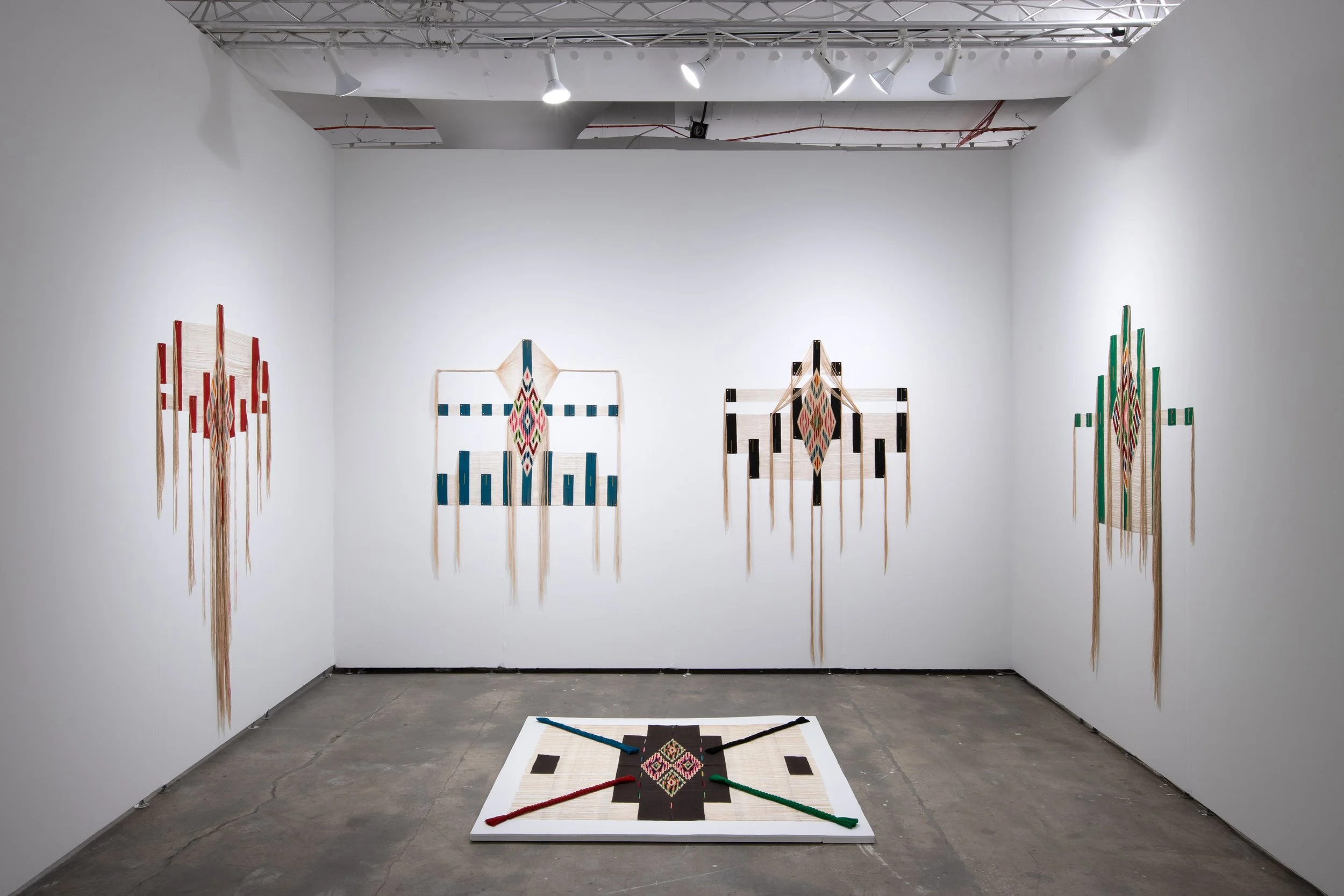
Sacred Elements / Calling Elemental Spirits
NADA NY 2026
Kelly Tapia-Chuning
May 13th – 18th, 2026
The Starrett-Lehigh Building
Milk Moon Gallery is pleased to present a solo booth featuring new work by textile artist, Kelly Tapia-Chuning, whose practice addresses colonialism and assimilation through the lens of her mixed-Indigenous ancestry. Our presentation comprises four large scale wall pieces and a medium format floor installation, along with an interactive component that allows attendees to participate in the living document of Tapia-Chuning’s work and artistic practice.
Tapia-Chuning’s deconstructed, vintage serapes explore colonial assimilation and the complications inherent in exploring Indigenous histories within the confines of the very systems that sought to erase them. While serapes are largely recognized as colorful emblems of Mexican heritage, their popularity in post-revolutionary Mexico is rooted in state-sponsored ideals of unity and cultural hegemony, which came at the high price of the erasure of Indigenous peoples and their cultural traditions.
Tapia-Chuning’s process of dismantling and transforming the serapes lays bare the colonial violence that is inseparable from the object, while simultaneously reclaiming the woven blankets and recentering their narrative around Indigenous healing.
“By utilizing the serape—a textile with both colonial European and Indigenous origins—I aim to acknowledge history while reimagining the future. Through the deconstruction of the serape and its history, I challenge the system of assimilation that has impacted not only my family but many others as a consequence of colonization. My work examines this traditional ‘Mexican’ textile to prompt questions and inquiry, reframing the conventional narratives of a dominant visual representation. By removing parts of the serape, I signal a dismantling of the systems within colonial power structures.”
The four textile pieces we are showcasing quietly echo the four sacred elements of earth, air, fire, and water in their color schemes. The artworks feature motifs inspired by the artist’s personal relationship with these elements, as well as designs found on pre-hispanic ceramic vessels from the artist’s ancestral homelands in the Sonoran Desert and the Sierra Madre Occidental region of Zacatecas and Jalisco. As a visual and conceptual anchor, the floor piece features aspects of all four elements, becoming representative of the fifth element; harmony and balance, which is present throughout Mexican Indigenous knowledge systems.Additionally, portions of the removed weft thread from the five pieces will be available for attendees to take with them to carry, create, and offer as they are called to. The artist will be on-site for the duration of the fair to help facilitate this interactive portion of the booth.
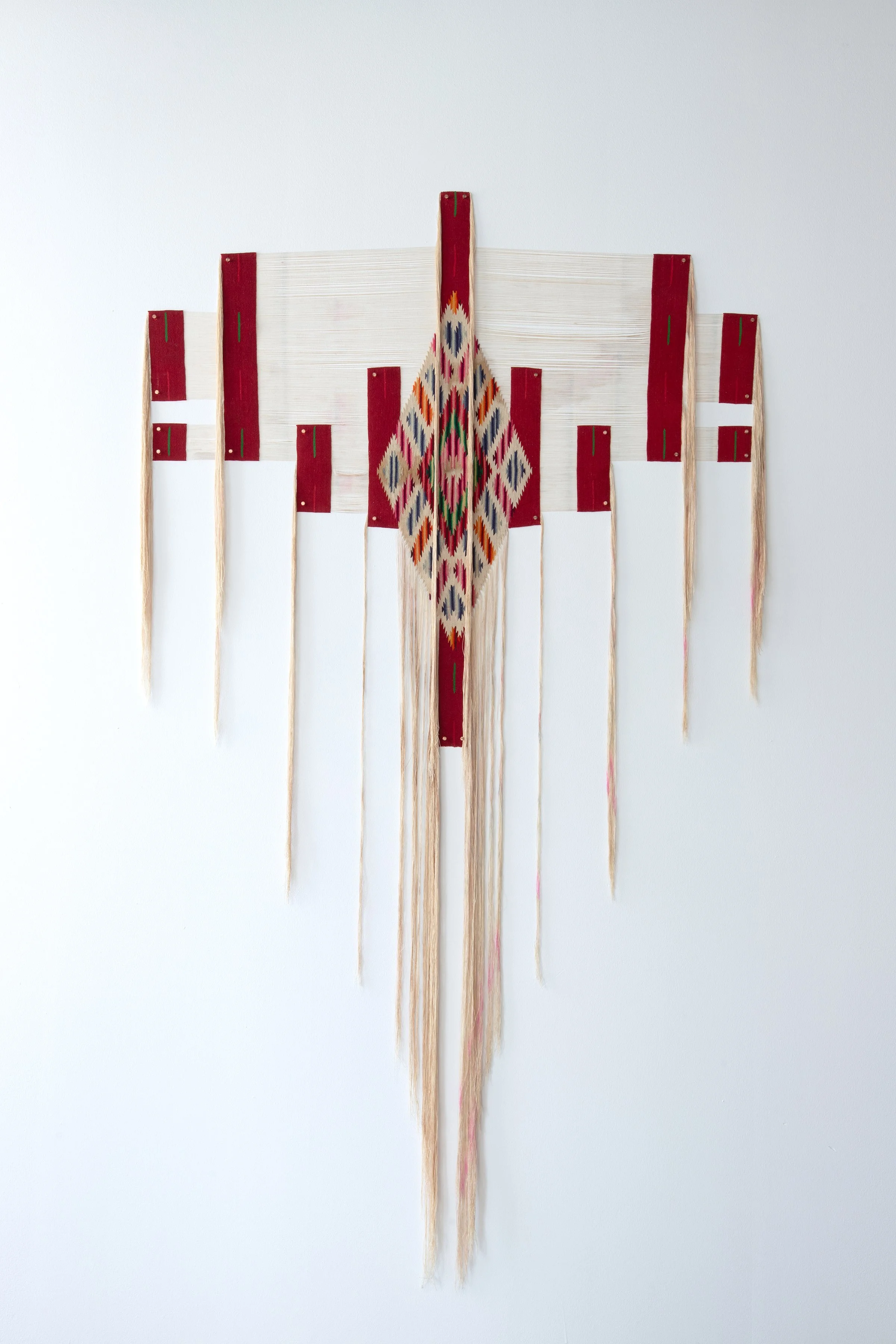
Sacred Fire / Transformation of the Soul, Divine Fire Within / a prayer for rebirth and renewal
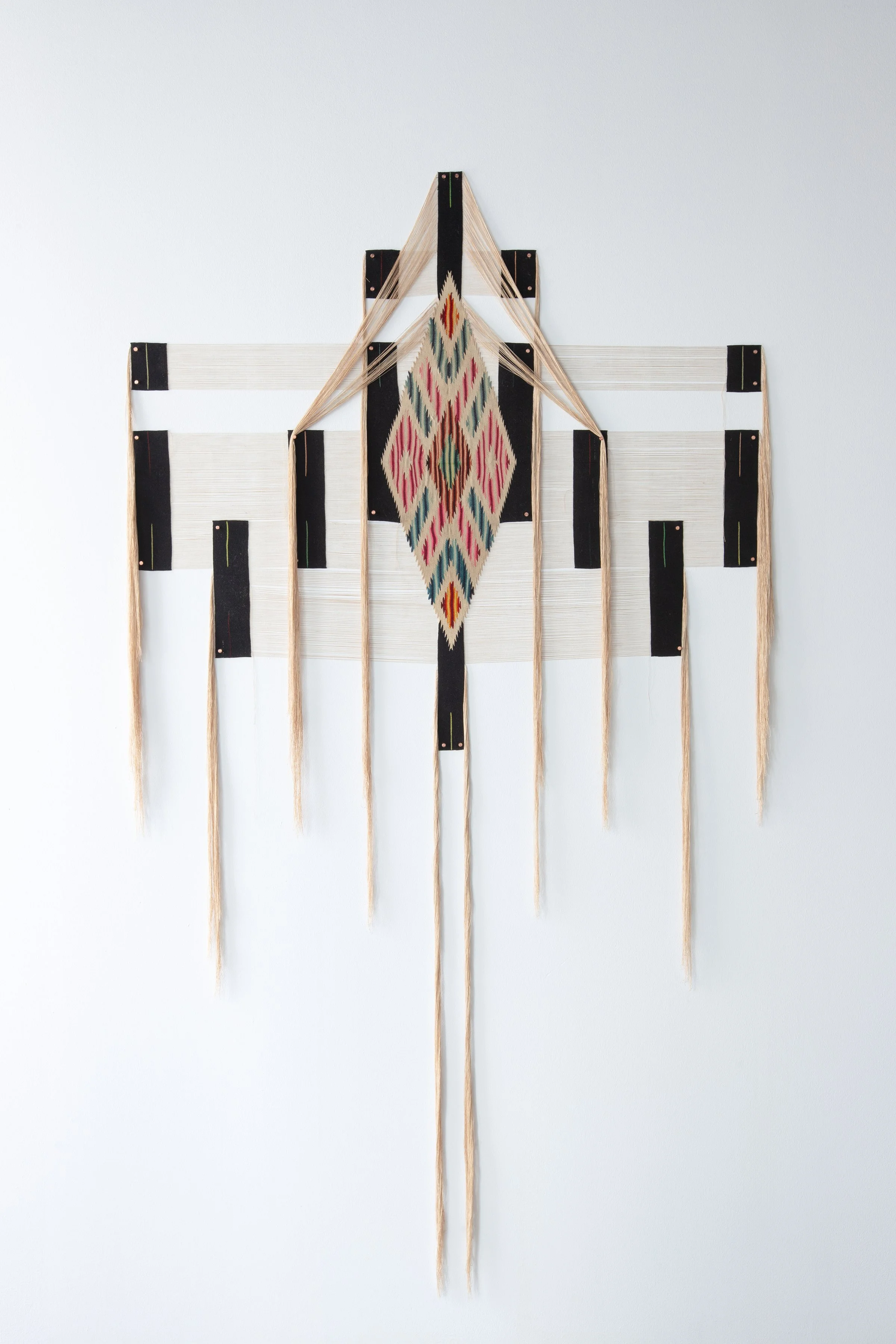
Sacred Air / Expansion of the Heart and Mind / Fulfillment of Life / a prayer for wisdom and guidance
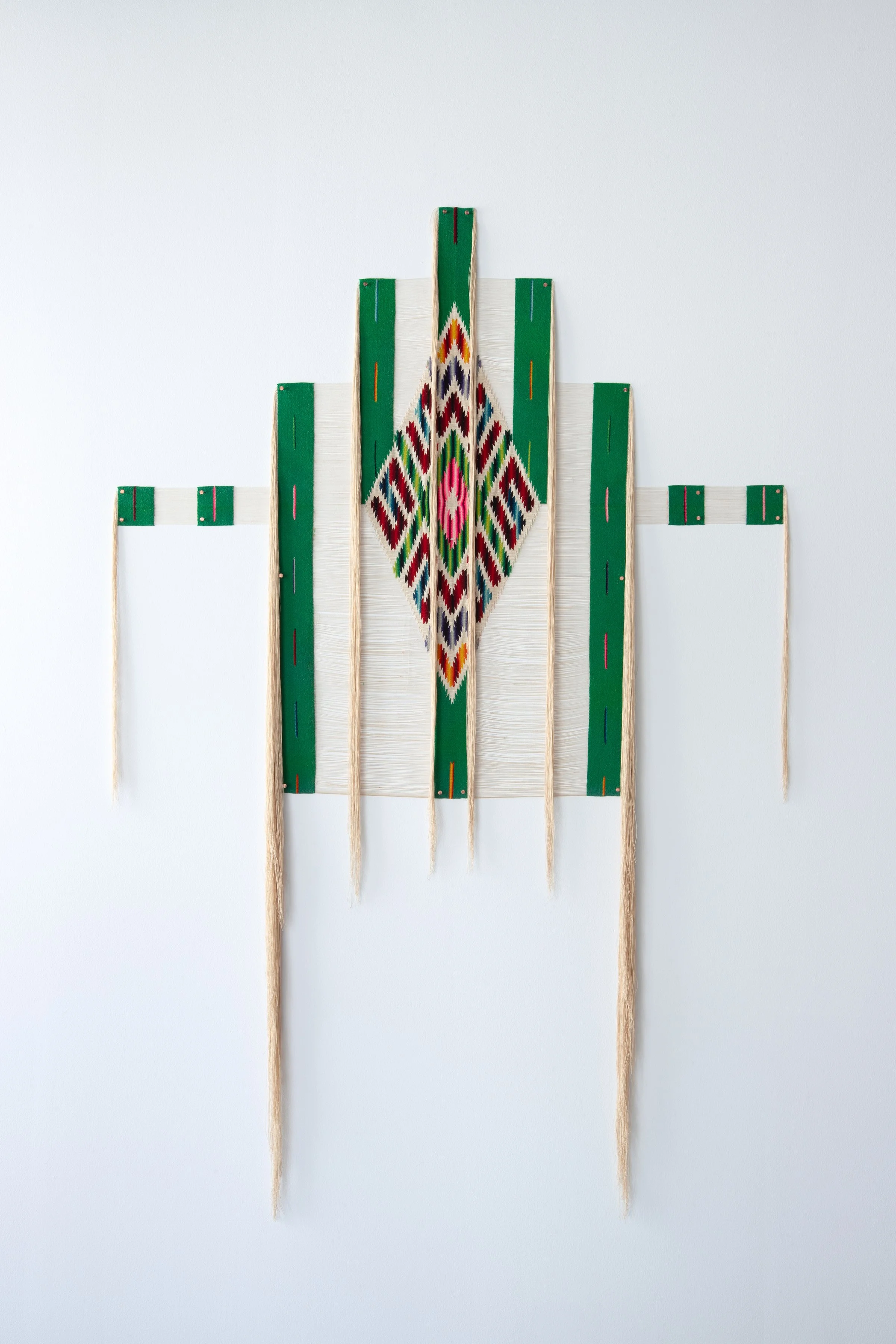
Sacred Earth / Gratitude to Madre Tierra and All She Provides / a prayer for strength and abundance
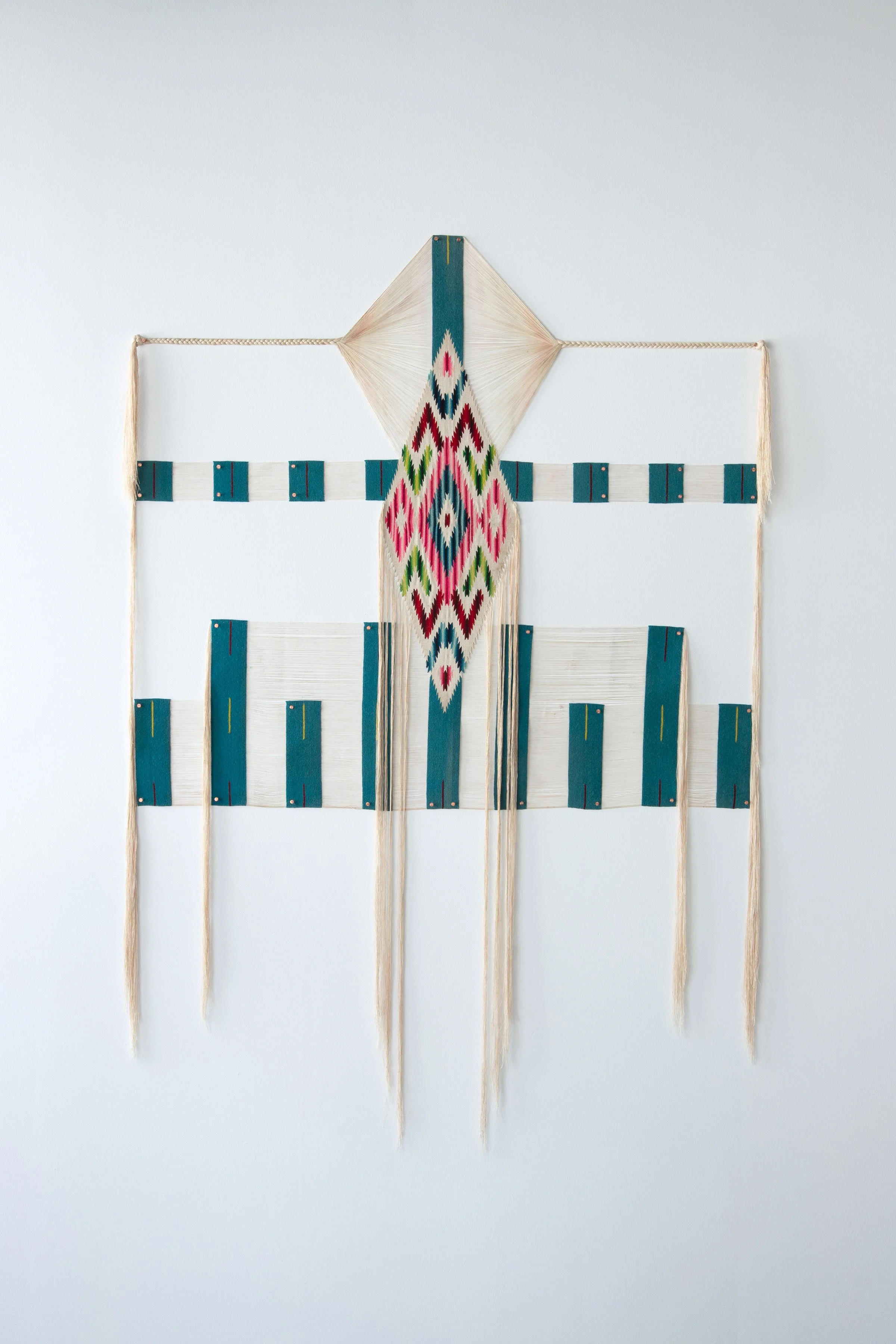
Sacred Water / Healing Womb, Carrier of Memories / a prayer for cleansing and nourishment
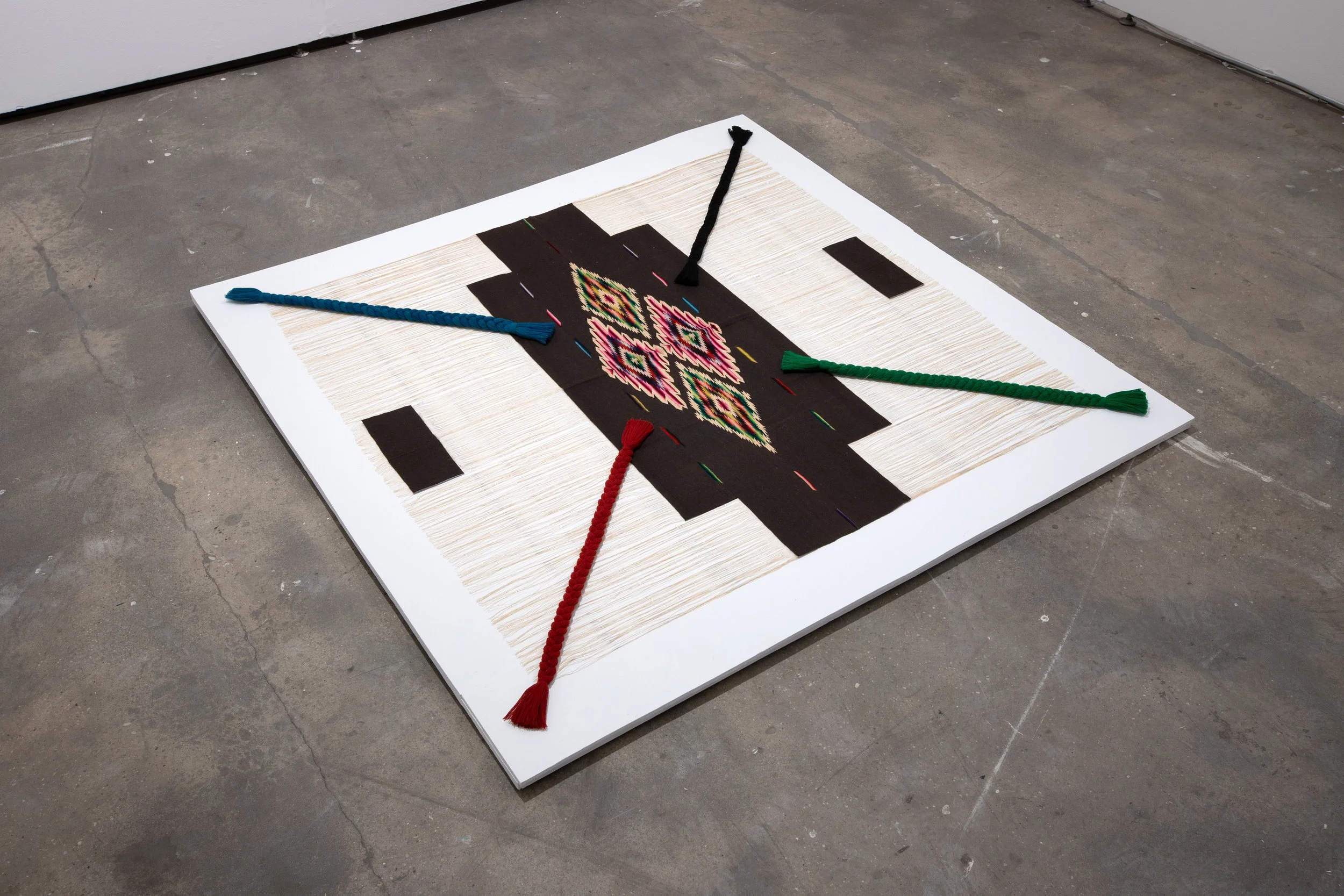
Sacred Center / Where Earth and Cosmos meet, a reminder of our interconnectedness to all that is / a prayer for wholeness and balance